Chapter 7 Thermochemistry Chemistry 11th Class Punjab MCQ Tests
11th Class Chemistry Chapter 7 MCQ Tests
Chapter 7 of 11th Class Chemistry has 20 questions. If you take an online MCQ test, the system will randomly choose the questions. If you want to take the quiz by chapter then click the start test button.
Total Questions: 20
Total Marks: 20
Time: 20 Mins
Total Questions: 20
Total Marks: 20
Time: 20 Mins
20Min : 00 Sec Remaining
Question # 1
The enthalpies of atomization are always _____.
Question # 2
The reaction given in the figure causes the temperature of its surroundings to increase. This reaction is _____, and therefore heat is _____ by the reaction.

Question # 3
Work done by a system on the surrounding is taken to be _____.
Question # 4
Work done on a system is taken to be _____.
Question # 5
Two fundamental ways to transfer energy are _____.
Question # 6
In case of nonspontaneous reaction, the reaction favoured is _____.
Question # 7
Lattice energy can be calculated by means of _____.
Question # 8
BornHaber cycle is an application of _____.
Question # 9
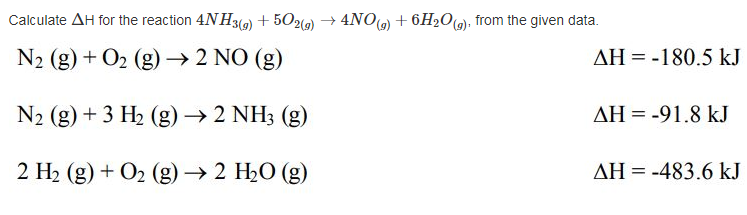
Reaction:
Question # 10
What type of chemical reaction absorbs energy from the surrounding to occur?
Question # 11
In view of Born-Haber cycle, energy change in cyclic process is always _____.
Question # 12
What type of reactions does not require initial energy to occur?
Question # 13
When two chemicals mix their temperature rises:
Question # 14
The change in internal energy of a system at constant volume is equal to heat absorbed.
Question # 15
A system has constant volume ( Δ V=0) and the heat around the system increases by 38 J. What is Δ U equal to?
Question # 16
The enthalpy change when one mole of a substance is completely burnt in excess of oxygen under STP:
Question # 17
All bonds in the compound are _____ in atomization.
Question # 18
Which statement correctly describes Hess's Law?
Question # 19
When one mole of a strong acid neutralises one mole of a strong base, the enthalpy change is _____.
Question # 20
If a reaction finishes with more energy than it started, it must be an _____ reaction.
Total Questions
1234567891011121314151617181920
Question # 1
The enthalpies of atomization are always _____.
Question # 2
The reaction given in the figure causes the temperature of its surroundings to increase. This reaction is _____, and therefore heat is _____ by the reaction.
Question # 3
Work done by a system on the surrounding is taken to be _____.
Question # 4
Work done on a system is taken to be _____.
Question # 5
Two fundamental ways to transfer energy are _____.
Question # 6
In case of nonspontaneous reaction, the reaction favoured is _____.
Question # 7
Lattice energy can be calculated by means of _____.
Question # 8
BornHaber cycle is an application of _____.
Question # 9
Reaction:
Question # 10
What type of chemical reaction absorbs energy from the surrounding to occur?
Question # 11
In view of Born-Haber cycle, energy change in cyclic process is always _____.
Question # 12
What type of reactions does not require initial energy to occur?
Question # 13
When two chemicals mix their temperature rises:
Question # 14
The change in internal energy of a system at constant volume is equal to heat absorbed.
Question # 15
A system has constant volume ( Δ V=0) and the heat around the system increases by 38 J. What is Δ U equal to?
Question # 16
The enthalpy change when one mole of a substance is completely burnt in excess of oxygen under STP:
Question # 17
All bonds in the compound are _____ in atomization.
Question # 18
Which statement correctly describes Hess's Law?
Question # 19
When one mole of a strong acid neutralises one mole of a strong base, the enthalpy change is _____.
Question # 20
If a reaction finishes with more energy than it started, it must be an _____ reaction.
Total Questions
1234567891011121314151617181920
Chemistry MCQ Test by Topics
- +7.0.0 INTRODUCTION
- +7.1 Spontaneous and Non-Spontaneous Reactions
- +7.2 System, Surronding and State Function
- +7.3 Internal Energy and First Law of Thermodynamic
- +7.3.1 First Law of Thermodynamics
- +7.4 Enthalpy
- +7.4.1 Enthalpy of a Reaction (?H)
- +7.4.2 Enthalpy of Formation (?H0f)
- +7.4.3 Enthalpy of Atomization (?H0at)
- +7.4.4 Enthalpy of Neutralization (?H0n)
- +7.4.5 Enthalpy of Combustion (?H0c)
- +7.4.6 Enthalpy of Solution (?H0sol.)
- +7.4.7 Measurement of Enthalpy of a Reaction
- +7.4.7.1 Glass Calorimeter
- +7.4.7.2 Bomb Calorimeter
- +7.5.0 HESS?S LAW OF CONSTANT HEAT SUMMATION
- +7.5.1 The Bom -Haber Cycle
Chemistry




11th Class Online Classes 2026
Updated on: 14-10-2026
11th Class Online Preparation
11th Class 2026 Online
11th Class 2026
Add a Comment
Comments will be shown after admin approval.
Spam comments will not be approved at all.
Matric Result 2026 Punjab
10th Class Result 2026 Punjab
9th Class Result 2026 Punjab Boards
10th Class Result Gazette 2026 Punjab
Punjab Past Papers Matric 9th 10th
Primary Results 5th & 8th Class
BISE Results Intermediate & Matric
BISE Punjab Boards
Sindh Educational Boards
KPK Examination Boards
Technical Boards
Public Service Commission
University Results Gruaduation, Masters Classes
Subscribe by Email
Subscribe by Email
Subscribe to Rss Feed


Position Holders Matric 2026
Position Holders 9th Class 2026
Position Holders Inter 2026
Position Holders 11th Class 2026
Punjab 11th Class Chemistry